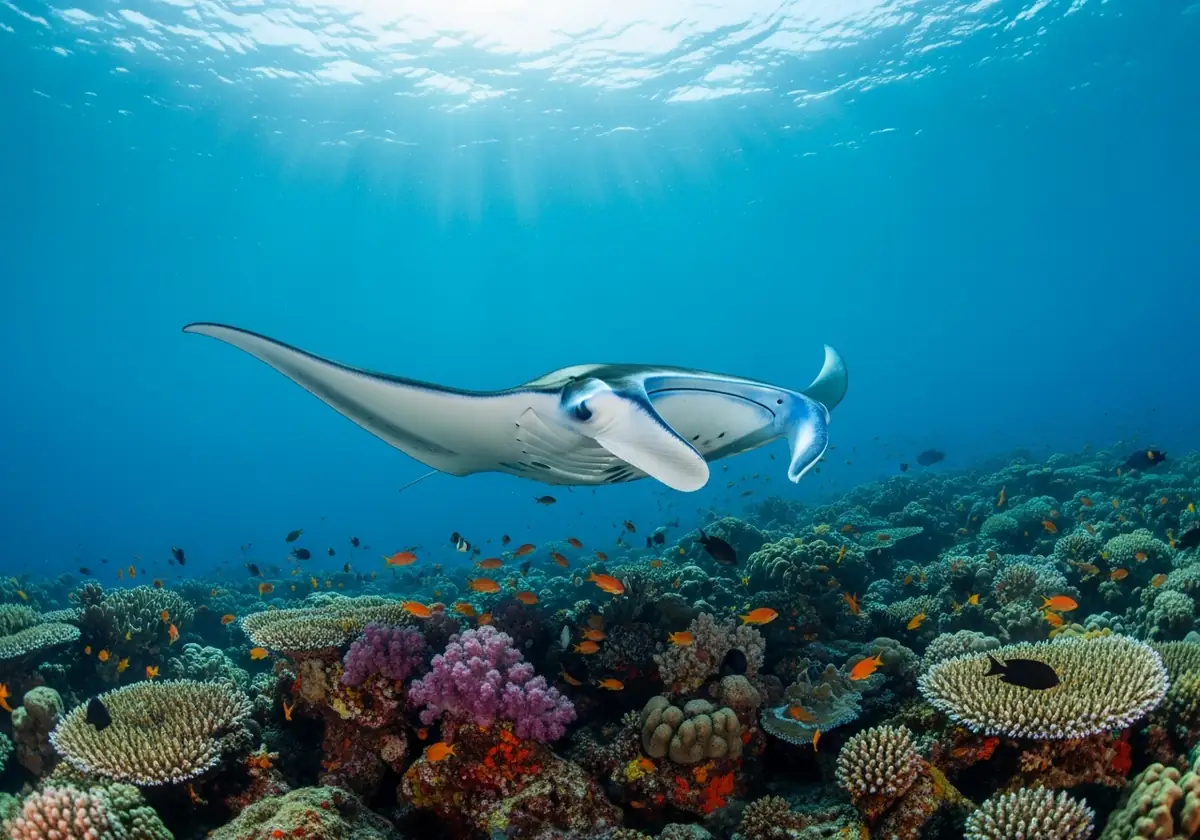
Explore the peak manta season in Komodo from December to March, where up to 50 mantas can be seen at Manta Point. Find out why sleeping aboard a liveaboard offers the best experience in Komodo National Park.
Understanding the Komodo Manta Season
The allure of diving with manta rays draws many to Komodo National Park each year. The Komodo manta season peaks between December and March when plankton blooms attract both resident and transient mantas. During this time, divers can witness an extraordinary congregation of up to 50 mantas in a single dive at Manta Point, also known as Karang Makassar.
Why December to March?
This period marks the wet season in Komodo, bringing nutrient-rich waters that support an abundance of plankton, the primary food source for mantas. The influx of food attracts mantas from far and wide, making it the optimal time for divers to see these majestic creatures.
Year-Round Manta Sightings
It is important to note that mantas are present throughout the year in Komodo. However, the peak months offer the highest chances for large numbers. Resident mantas can be spotted even outside this period, providing opportunities for those visiting during the dry season.
Visibility and Dive Conditions
For those prioritising visibility, the dry season from June to September offers the clearest waters, with visibility ranging from 20 to 30 meters, particularly in the northern dive sites. However, this period coincides with fewer manta sightings compared to the wet season’s peak.
Optimal Conditions for Diving
- Best Visibility: Achieved from June to September, ideal for capturing the vibrant marine life and expansive coral gardens.
- Water Temperatures: Expect temperatures between 27–30°C during the wet season and 26–29°C in the dry season, perfect for comfortable diving.
- Weather Patterns: The wet season brings rougher waters, particularly in January and February, which can affect dive plans in the north.
Exploring Named Dive Sites
Beyond Manta Point, Komodo National Park offers a diverse array of dive sites, each with unique aquatic experiences.
Highlights of Komodo’s Dive Sites
- Batu Bolong: Known for its strong currents and rich marine biodiversity, providing thrilling dives for experienced divers.
- Castle Rock: A volcanic rock teeming with coral gardens and pelagic species, offering a spectacular underwater display.
- Crystal Rock: Famous for its clear waters and vibrant soft corals, ideal for photography enthusiasts.
- Cannibal Rock: Features dramatic feeding scenes and the presence of large marine predators, making it a must-visit for adventurous divers.
Liveaboard Itineraries and Routes
Choosing a liveaboard is undeniably the best way to fully experience Komodo’s underwater wonders. Vessels depart from Labuan Bajo, located just 10-15 minutes from Komodo Airport, offering various itinerary lengths to suit different preferences.
Popular Liveaboard Options
- 4–7 Day Trips: These itineraries are the most common, often covering key dive sites including Manta Point, Pink Beach, and Rinca Island.
- Extended Trips: Ranging up to 10 days, these trips provide comprehensive coverage of both central and southern park sites.
For those interested in a bespoke experience, private charters are available, offering tailored routes and exclusive accommodations aboard traditional Indonesian phinisi.
Park Entry Requirements and Fees
Visiting Komodo National Park involves several regulations that divers need to be aware of, including the entry fee and visitor cap.
2026 Update: Regulations
- Daily Visitor Limit: Starting February 2026, the park will limit entries to 1,000 visitors per day across all sites.
- Entrance Fee: Estimated between $30–$50 USD per person, fees must be booked and paid in advance, with passport copies required.
- Reimbursement: Many operators offer local reimbursement in IDR cash upon arrival, but it’s advisable to verify this with your provider.
Choosing Your Vessel
Dive cruises in Komodo are typically conducted aboard beautifully crafted phinisi liveaboards, featuring 8 to 12 cabins with various amenities to enhance comfort during your journey.
Cabin and Vessel Features
- Cabin Options: Choose between double beds and shared or private bathrooms, with air conditioning or fan options.
- Cruising Speed: Vessels travel at speeds of 8–12 knots, with drift dives occurring at 2–4 knots, ensuring a smooth experience.
- Snorkelling: Most cruises include snorkelling, with some premium options priced at approximately $295 USD per day.
Plan Your Komodo Liveaboard Adventure
For those seeking the ultimate diving experience in Komodo National Park, a liveaboard trip offers exceptional access to remote sites and the chance to dive with mantas in their natural habitat. Whether you’re drawn by the manta season or the incredible diversity of marine life, planning your trip with Komodo Liveaboard Luxury ensures a premium experience.
To plan your Komodo liveaboard on WhatsApp, connect with us today and begin on a journey to discover the underwater marvels of Komodo.
Preparing for Your Komodo Dive Cruise: Essential Packing Tips
setting out on a Komodo dive cruise requires careful packing to ensure a comfortable and enjoyable experience. Here’s a guide to help you prepare for your adventure in the Komodo National Park.
- Diving Gear: While most liveaboards provide essential diving equipment, consider packing your own mask, snorkel, wetsuit, and dive computer for a more personalised experience.
- Clothing: Lightweight, breathable clothing is ideal for the tropical climate. Don’t forget a wide-brimmed hat and sunglasses for sun protection during excursions.
- Footwear: Bring sturdy sandals or water shoes for island visits, particularly to sites like Padar and Pink Beach.
- Sun Protection: High-SPF sunscreen, reef-safe options are recommended to protect both your skin and the marine environment.
- Personal Essentials: Pack toiletries, medications, and a small first-aid kit. Motion sickness tablets can be useful for those unaccustomed to life at sea.
- Electronics: A waterproof camera is invaluable for capturing underwater moments. Ensure you have sufficient memory cards and a power bank.
By packing thoughtfully, you’ll be well-prepared to make the most of your Komodo liveaboard experience.
Spotlight on Signature Dive Sites: What to Expect
The Komodo National Park is renowned for its diverse marine life and stunning underwater landscapes. Here’s what awaits you at some of the park’s most famous dive sites:
| Dive Site | Highlights |
|---|---|
| Batu Bolong | Rich coral reefs, vibrant fish life, and occasional encounters with reef sharks and turtles. |
| Castle Rock | Strong currents make this site ideal for spotting large pelagics like grey reef sharks and trevallies. |
| Crystal Rock | Known for its colourful soft corals and the chance to see schools of barracuda and napoleon wrasse. |
| Cannibal Rock | A macro paradise with nudibranchs, frogfish, and vibrant coral gardens. |
Each site offers unique features, making every dive an unforgettable experience. Choose your luxury phinisi liveaboard itinerary wisely to maximise your exploration.
Maximising Your Itinerary: Timing and Activities
Timing is crucial when planning a liveaboard journey in Komodo. The best season runs from April to November, with optimal conditions for diving and exploring the islands.
Your adventure begins in Labuan Bajo, conveniently located just 3 km from Komodo Airport (LBJ). From here, a typical itinerary might include:
- Day 1: Departure from Labuan Bajo, with a check dive around Kanawa Island.
- Day 2: Dive Batu Bolong and Castle Rock, followed by a sunset trek on Rinca Island.
- Day 3: Experience the currents at Crystal Rock and unwind on Pink Beach.
- Day 4: Dive Cannibal Rock and explore the famed Manta Point.
- Day 5: Final dives at Padar, with its spectacular views, before returning to Labuan Bajo.
Plan your days to balance diving with island exploration and relaxation. For more detailed itinerary options, visit our itineraries page. Start now and plan your Komodo liveaboard on WhatsApp.